
How Do I Release My Lower Back? Dr Miles Upfold, Leederville Chiropractor Explains
“How do I release my lower back?” is one of the most common questions I hear in practice.
If you’re constantly feeling tight, stiff, or like you need to crack or stretch your lower back, you’re not alone. Many people in Leederville and across Perth experience this daily — often without understanding why it keeps happening.
The important thing to know is this:
The feeling that you need to release your lower back is usually a symptom, not the cause.
Let’s break down what’s really going on, and what actually helps.
Why Your Lower Back Feels Like It Needs “Releasing”
When someone asks, “How do I release my lower back?”, the most common underlying issues we find during assessment are:
Imbalance left to right
Imbalance front to back
Poor neuromuscular control
Repetitive postural or biomechanical stress
In other words, the lower back often tightens in response to something else not working properly. That tension is your body’s way of protecting an area under stress.
If posture, movement patterns, or nervous system control aren’t addressed, the tightness keeps returning, no matter how often you stretch or crack your back.

How We Release the Lower Back at Up Chiropractic Leederville
At Up Chiropractic in Leederville, we don’t just chase the tight spot. We look for why it’s tightening in the first place.
Techniques We Use
Manual chiropractic adjustments
Drop-piece adjusting
Instrument adjusting (Activator)
Neuro-muscular balancing
Postural retraining
These approaches help restore proper joint motion, improve nervous system input, and reduce the protective muscle guarding that creates the feeling of needing to “release” your lower back.
Why Stretching Alone Often Doesn’t Work
Many patients tell me they’re constantly stretching or cracking their own lower back to feel temporary relief.
A common pattern we see:
The lower back tightens
They stretch or crack it
It feels better briefly
The tightness returns again… and again
This happens because the tightness is often protective, not the problem itself.
Once we identify the underlying cause, whether it’s imbalance, instability, or poor neurological input, the constant urge to release the lower back usually disappears.
Our Clinical Philosophy: A Whole-System Approach
Lower back tightness needs to be approached:
Neurologically
Biomechanically
Functionally
Treating just the structure without addressing nervous system control and movement patterns rarely leads to lasting change. That’s why our care model at Up Chiropractic focuses on restoring how the brain, muscles, and spine work together.
Safe Ways to Release Your Lower Back at Home
When appropriate, we may recommend safe self-release strategies, including:
Foam rolling (specific to your issue)
Dead hangs
Targeted stretches (not generic)
Walking and swimming
Mobility work
Breathing strategies
These can help, when used correctly and for the right reason.
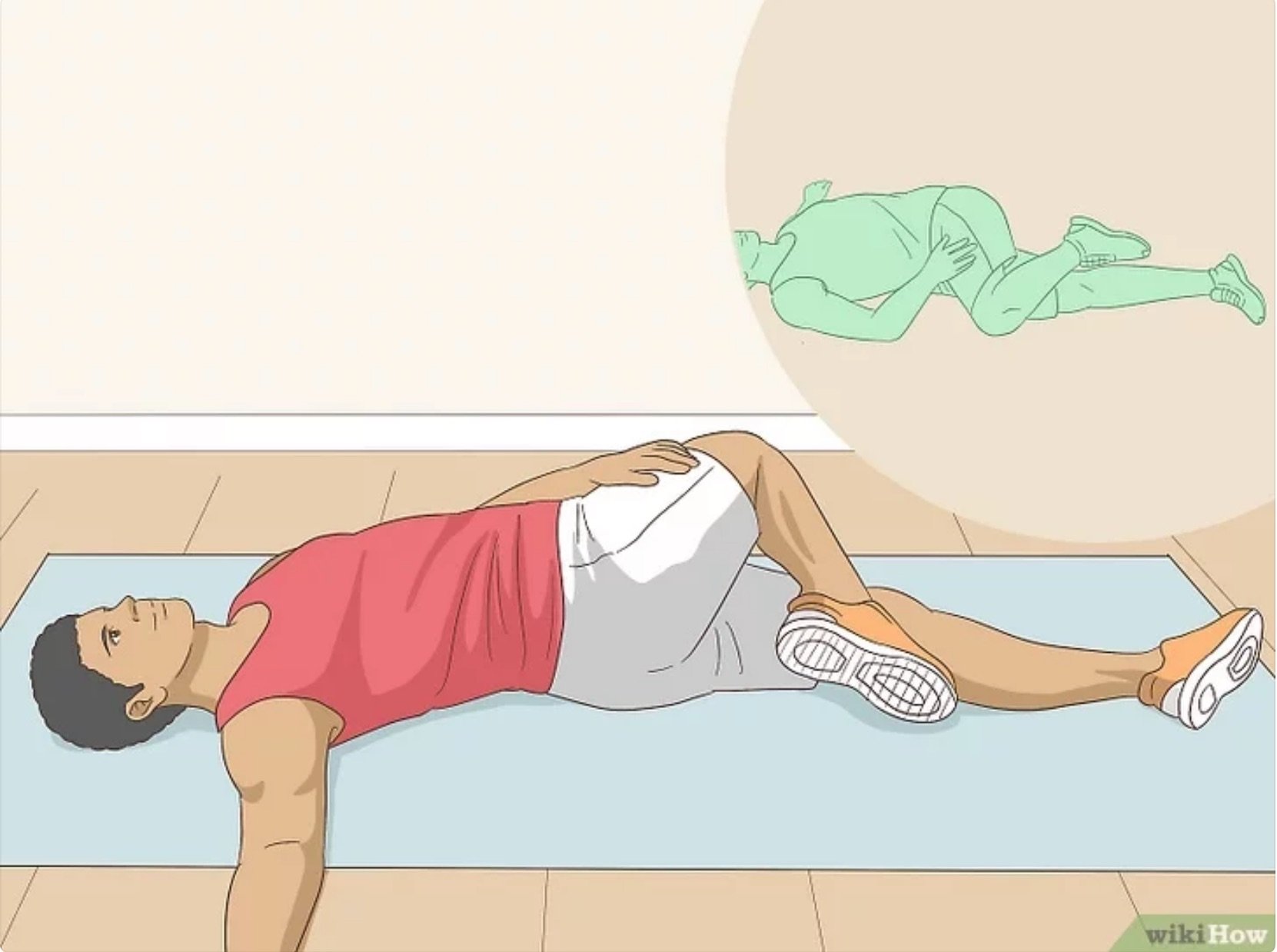
What Not to Do: The “Footballer’s Stretch”
One release technique we often advise against is the side-lying spinal twist where people force their spine to crack.
This movement:
Places unnecessary stress on spinal discs
Can create hypermobility in joints that don’t need it
Often worsens symptoms long-term
If you’re repeatedly cracking your lower back to feel relief, it’s a sign your body needs assessment, not more force.
When Lower Back Tightness Needs Professional Assessment
You should seek assessment if:
The tightness is recurrent or chronic
Relief from foam rolling or hanging is only temporary
It’s associated with pain
You feel very stiff in the morning that eases through the day (possible inflammatory pattern)
In these cases, asking “How do I release my lower back?” is really asking………..What is my body trying to protect?
The Neurological Reason Your Lower Back Tightens
Research from Heidi Haavik, NZCC, and the Australian Spinal Research Foundation shows that the small intersegmental muscles of the spine require specific neurological input at their exact spinal level. When this input is reduced:
Stability decreases
Muscles guard or tighten
Movement becomes inefficient
Precise chiropractic adjustments restore this neurological input, helping the muscles respond appropriately, rather than staying locked in protective tension.
“Modern research supports the idea that chiropractic adjustments don’t just move joints, they interact with the nervous system. Studies from the New Zealand College of Chiropractic show that spinal adjustments can produce neuroplastic changes in the brain and sensory-motor processing, which may help improve muscle coordination and reduce pain. Other evidence demonstrates that adjustments influence corticomotor excitability and reflex pathways like the H-reflex and V-wave, indicating enhanced nervous system communication to muscles. Additionally, research suggests changes in afferent spinal input may alter central processing, enabling better integration of sensory and motor signals. These findings provide a neurological explanation for why precision chiropractic care can reduce the protective muscle tension many people feel in their lower back.” Australian Spinal Research Foundation+3MDPI+3Frontiers+3
Research:
Heidi Haavik et al. Neuroplastic Responses to Chiropractic Care: Broad Impacts on Pain, Mood, Sleep, and Quality of Life. Brain Sciences.
https://doi.org/10.3390/brainsci14111124 MDPINavid MS et al. Chiropractic Spinal Adjustment Increases Corticomotor Excitability. Frontiers in Neurology. Frontiers
Chiropractic spinal adjustments alter afferent input and central nervous system processing (Nature Scientific Reports overview). Nature
Chiropractic care & nervous system responsiveness research (supported by Australian Spinal Research Foundation and NZCC). Australian Spinal Research Foundation
Lifestyle Factors That Keep Lower Back Tension Coming Back
In our Leederville patient base, the biggest contributors to recurring lower back tension are:
1. Sitting………the number one culprit!
Prolonged sitting reduces movement variety and nervous system input.
2. Lack of daily movement
Not enough walking, mobility, or varied movement patterns.
3. Chronic stress
Stress directly affects muscle tone and nervous system regulation.
Releasing the lower back without changing these patterns is like bailing water out of a leaking boat.
What Makes Our Lower Back Care Different in Perth
At Up Chiropractic, our approach is:
Functional nervous system–based
Evidence-driven
Holistic and lifestyle-focused
We use:
Digital biomechanical full-spine X-rays
Functional neuromuscular testing
Postural and movement assessment
This allows us to identify why your lower back keeps tightening, not just where it hurts.
So……… How Do I Release My Lower Back?
The real answer is this:
By identifying and correcting imbalance, improving nervous system control, restoring proper movement patterns and addressing posture, stress, and lifestyle
Temporary release feels good, but lasting relief comes from fixing the cause.
If you’re in Leederville or the wider Perth area and constantly asking “How do I release my lower back?”, we’re here to help you understand your body and create long-term change.