
Is Your Headache Actually a Neck Problem? Leederville Chiropractor Explains
What Actually Is a Cervicogenic Headache?
You know the one. It starts as a dull ache at the base of your skull around 3pm, creeps up one side of your head, and by the time you get home it feels like someone has wrapped a cord around your temple. You reach for paracetamol, but it never quite touches it, because the tablet is treating the wrong location. A cervicogenic headache does not start in your head at all. It starts in your neck.
A cervicogenic headache is a headache caused by a problem in the cervical spine (your neck) rather than by the brain itself. [1] It is what’s called a “referred pain” headache: irritation in the joints, discs or muscles of the upper neck sends pain signals along shared nerve pathways that the brain misreads as coming from the head, face or behind the eyes. It’s a common cause of chronic, recurring head pain, and one of the most frequently missed, because it can look a lot like a migraine or a tension headache on the surface. [1]
How Does a Neck Problem Turn Into a Headache?
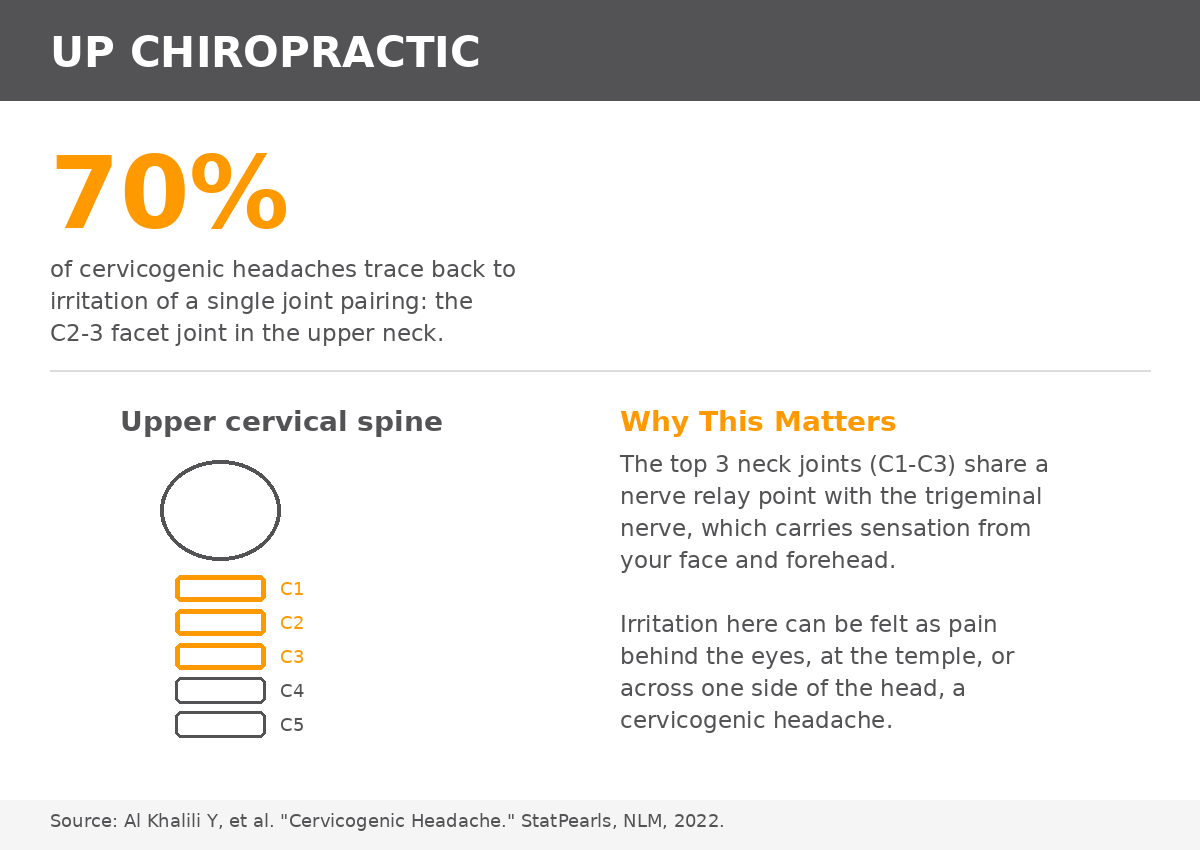
The explanation lies in a structure called the trigeminocervical nucleus. This is the point in your upper spinal cord where nerve signals from your top three neck joints (C1, C2 and C3) converge with the nerve that carries sensation from your face and forehead, the trigeminal nerve. [1] Because these signals share the same relay station, your brain can genuinely struggle to tell the difference between “my neck joint is irritated” and “my head hurts.” Around 70 percent of cervicogenic headaches are traced back to irritation of a single joint pairing, the C2-3 facet joint on one side of the upper neck. [1]
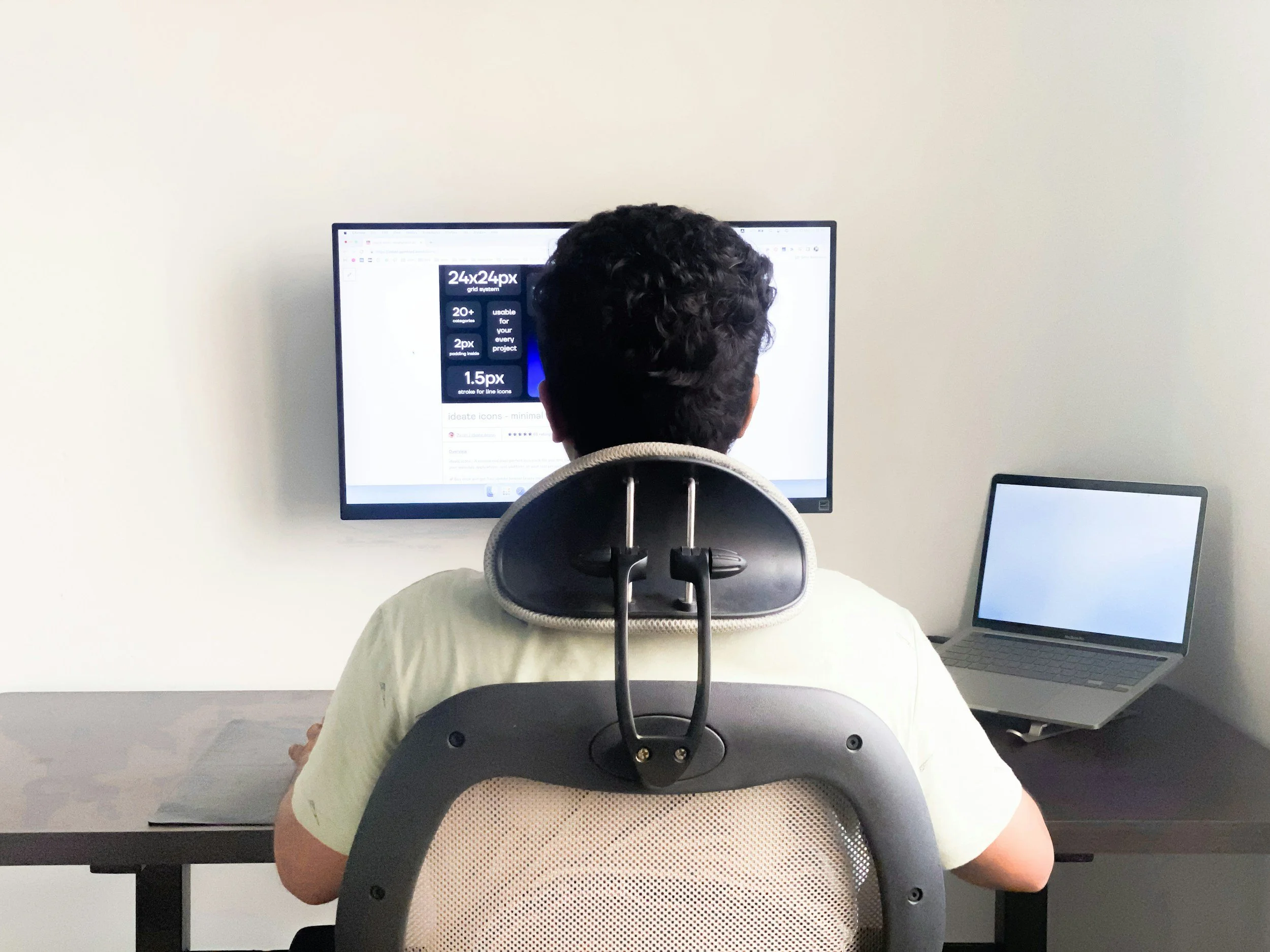
This is also why cervicogenic headaches are almost always one-sided, and why they tend to worsen with certain neck movements, sustained postures (hello, hours at a laptop) or pressure over the back of the skull.
What’s Actually Causing the Irritation?
In our Leederville practice, the underlying drivers we see most often include:
Prolonged forward head posture, from desk work, driving or scrolling on a phone, often called “tech neck.” This posture increases the mechanical load on the upper cervical joints and is a well-documented contributor to both tension-type and cervicogenic headache patterns. [2]
Whiplash or old neck trauma, even from years earlier, which can leave upper cervical joints mechanically irritable long after the initial injury has “healed.”
Poor sleep posture, particularly stomach sleeping or a pillow that holds the neck rotated or extended for hours at a time.
Muscle tension through the suboccipital muscles, the small muscles at the base of the skull that tighten in response to stress or sustained postures.
Degenerative changes in the upper cervical spine, which become more common with age but can also affect younger patients with a history of neck strain.
A cervicogenic headache is thought to affect somewhere between 0.4 and 4 percent of the general headache population, though it accounts for up to 15 to 20 percent of chronic, recurring headaches, which suggests it is significantly under-diagnosed. [3]
Worth Noting: Screen-based forward head posture doesn’t just strain the neck itself. Research shows that for every inch the head moves forward of a neutral position, the effective load on the cervical spine multiplies, which is precisely the mechanism thought to link “text neck” to headache frequency. [2]
Cervicogenic Headache vs. Migraine vs. Tension Headache
This matters because the right treatment depends on getting the diagnosis right. A few practical distinguishing features:
Cervicogenic headache is usually one-sided, worsens with neck movement or pressure on the upper neck, and often comes with reduced neck range of motion. [1]
Migraine typically involves throbbing pain, sensitivity to light and sound, and sometimes visual disturbances (aura). It’s less likely to be reproduced by pressing on the neck. [4]
Tension-type headache usually causes a dull, band-like pressure on both sides of the head, and while poor posture is a known trigger, it doesn’t reliably worsen with neck movement the way a cervicogenic headache does. [5]
Seek Urgent Care If: your headache comes on suddenly and severely, is the “worst headache of your life,” or is accompanied by fever, vomiting, confusion, neck stiffness, slurred speech, vision changes or weakness down one side of the body. These can indicate a more serious underlying cause and warrant emergency assessment. [4]
How Chiropractic Care Can Help
Cervicogenic headache is one of the headache types with the strongest evidence behind manual therapy as a first-line option. Clinical guidelines developed from a systematic review of controlled trials found that spinal manipulation is recommended for cervicogenic headache, with joint mobilisation and deep neck flexor strengthening exercises also improving symptoms in many patients. [6] A recently developed clinical practice guideline (2026) reaffirms chiropractic management, including spinal manipulative therapy and therapeutic exercise, as an appropriate first-line approach for both cervicogenic and tension-type headache in adults. [7]
“In practice, most patients are surprised the assessment starts at the neck rather than the head. Once we find and settle the irritated joint, a lot of the ‘headache’ resolves on its own.” – Dr Miles Upfold
At Up! Chiropractic, care for a suspected cervicogenic headache typically starts with a thorough case history and an assessment of upper cervical joint mobility, posture and muscle tension, before building a plan that may include gentle spinal adjustments, soft tissue work through the suboccipital and upper trapezius muscles may or may not be recommended, and postural or deep neck flexor exercises to keep symptoms from returning.
What You Can Do Right Now
Reset your screen height. Whether it’s a laptop or phone, bring the screen up to eye level where you can, rather than tipping your chin down for hours at a time.
Try the chin tuck. Gently draw your chin straight back (like making a double chin) and hold for five seconds, ten repetitions, a few times a day. It’s a simple way to strengthen the deep neck flexors that support the upper cervical joints.
Check your pillow. A pillow that’s too high, too flat, or leaves your neck rotated all night can keep upper neck joints irritated. Side or back sleeping with neutral neck support tends to fare best.
Take real screen breaks. Even sixty seconds of standing, shoulder rolls and a gentle neck stretch every 30 to 45 minutes can meaningfully offload the neck across a working day.
The Bottom Line: If your headaches consistently start at the base of your skull, sit on one side, or seem to track with how much time you’ve spent at a desk or on your phone, the cause may well be sitting in your neck rather than your head. The good news is that neck-driven headaches respond well to targeted, conservative care, and identifying the true source is most of the battle.
Frequently Asked Questions
Can a chiropractor tell the difference between a migraine and a cervicogenic headache?
Yes. A thorough case history combined with orthopaedic and neurological testing of the neck can usually establish whether neck movement or pressure reproduces your headache, which is a key diagnostic feature of a cervicogenic headache. [1]
How long does it take for neck-related headaches to improve with chiropractic care?
It varies with how long the pattern has been present, but many patients notice a reduction in frequency and intensity within several weeks of consistent, targeted care. Research on chiropractic dosing suggests a course of 9 to 12 treatments may offer the greatest benefit for chronic cases. [6]
Can desk work really cause headaches?
Yes. Sustained forward head posture increases load through the upper neck joints and surrounding muscles, and is a recognised contributor to both tension-type and cervicogenic headache patterns, particularly in people who spend long hours at a screen. [2] For more information on how forward head posture causes strain check our previous blog post Why Does My Neck Hurt After a Day at My Desk?
Ready to Get to the Bottom of Your Headaches?
If your headaches keep tracing back to your neck, a proper assessment can help identify the real cause and get you a plan that actually works. Book an Appointment
References
Al Khalili Y, Ly NK, Murphy PB. “Cervicogenic Headache.” StatPearls, National Library of Medicine. Updated October 3, 2022. https://www.ncbi.nlm.nih.gov/books/NBK507862/
International Association for the Study of Pain (IASP). “Text neck is not a pain in the neck.” IASP Relief News. https://www.iasp-pain.org/publications/relief-news/article/text-neck-pain/
Al Khalili Y, Ly NK, Murphy PB. “Cervicogenic Headache” (Epidemiology section). StatPearls, National Library of Medicine. Updated October 3, 2022. https://www.ncbi.nlm.nih.gov/books/NBK507862/
Healthdirect Australia. “Headaches - types, causes, migraines, treatment and prevention.” Last reviewed May 2025. https://www.healthdirect.gov.au/headaches
Healthdirect Australia. “Tension headache - causes, symptoms and treatment.” Last reviewed May 2025. https://www.healthdirect.gov.au/tension-headache
Bryans R, Descarreaux M, Duranleau M, et al. “Evidence-based guidelines for the chiropractic treatment of adults with headache.” Journal of Manipulative and Physiological Therapeutics. 2011;34(5):274-89. https://pubmed.ncbi.nlm.nih.gov/21640251/
Trager RJ, Daniels CJ, Hawk C, et al. “Chiropractic Management of Adults with Cervicogenic or Tension-Type Headaches: Development of a Clinical Practice Guideline.” 2026. https://pmc.ncbi.nlm.nih.gov/articles/PMC13157980/